What is this document?
Sweriges Rikes Lag Gillad och Antagen på Riksdagen Åhr 1734 is a monumental legal code based on a vision established in 1686 to create a comprehensive and unified system of justice for all citizens. The preface in the Sweriges Rikes Lag (1734) acknowledges that early legal records were fragmented and sometimes preserved in ancient forms, such as runes or inscriptions on wooden beams (balkar) kept in churches (Inger,1984).
This book represents both the definitive end of the medieval legal tradition and the starting point of a modern era of Swedish legal history. And this particular copy of the Sweriges Rikes Lag (1734) is usually stored in the archive of the court of Stockholm but through a family member we were able to get direct access to it for the duration of this project.
Through studying the book and additional sources, we identified the following reasons for its historical significance:
- Unified Legal System: For the very first time, Sweden achieved a common legal framework that applied to both the countryside and the cities.
- Bridge Between Eras: The law book is a blend of conservative tradition and modern legal practice. It retained traditional medieval structures, such as dividing the law into specific codes (balkar) and using practical and concrete rules rather than abstract theories, while also updating and codifying centuries of evolving legal practices.
- Reflection of the "Era of Liberty": Perhaps most importantly, the artefact is defined by what it deliberately excludes. Influenced by the political climate of the Era of Liberty (Frihetstiden), the creators kept fundamental constitutional laws (grundlagar), class privileges, and trade regulations completely separate from this general law. This separation was a deliberate ideological choice to guarantee the division of power and ensure that absolute monarchy (envälde) could never be re-established in Sweden (Inger, 1984; Modéer, 2010).
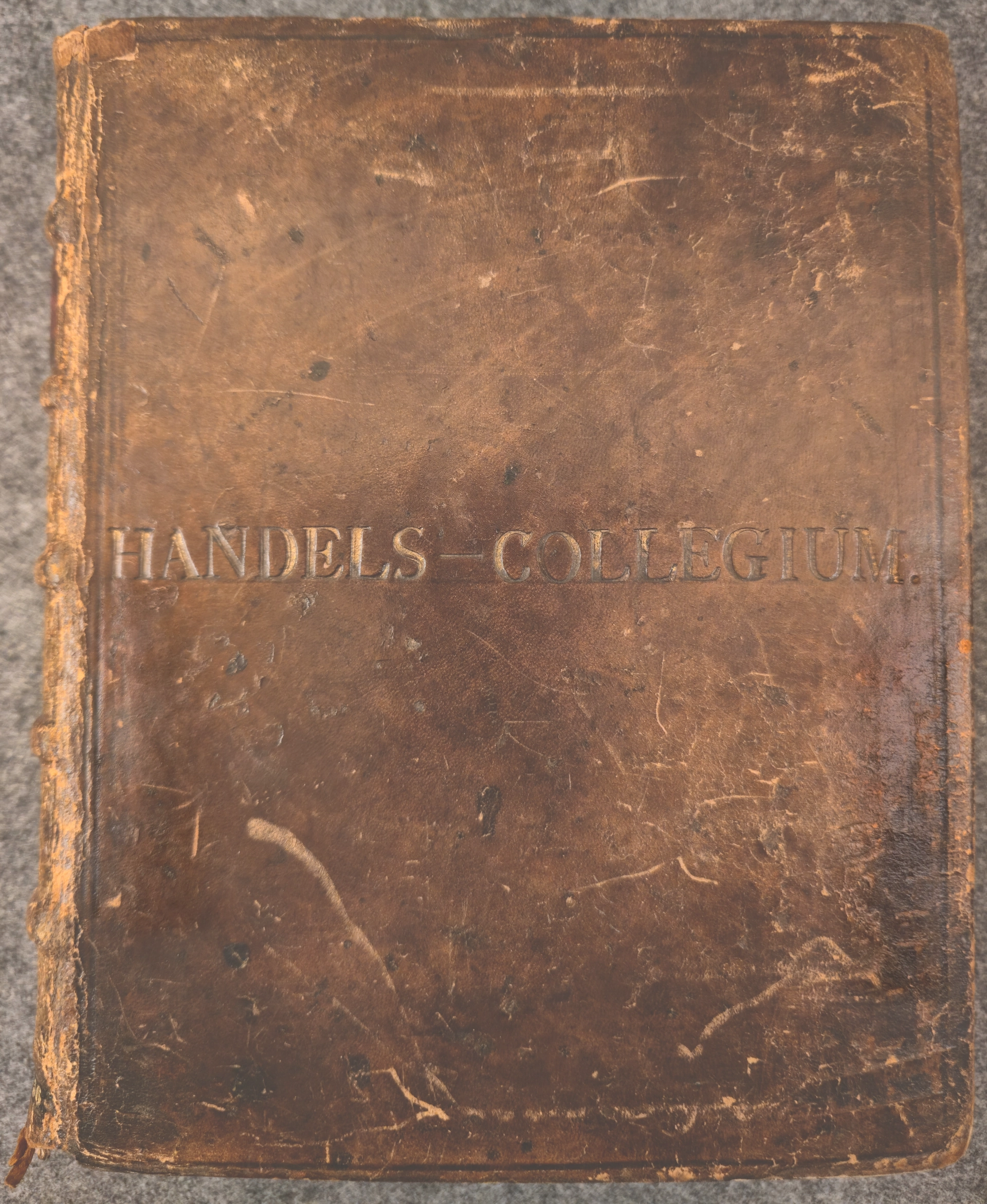
Sweriges Rikes Lag, 1734
The Books as Artefacts
We compared the 1734 artefact next to a modern 2023 Swedish law book and found interesting similarities. Neither book contains all the laws of Sweden and both surved as curated collections (författningssamlingar). Both books were printed by private entities as opposed to the government, and both were intended to serve as practical legal references for everyday use.
There is this major difference in how laws were made known. Today, the new laws passed by the Riksdag are instantly published online and become legally binding (Sveriges riksdag, 2023). In the 18th century, physical copies of this book had to be printed and distributed to courts and parishes across the country as the primary method of making the law known and enforceable.
The Evolution of Justice: "Stöld"
By examining the transcribed "Stöld" (Thievery) chapter in this digital edition, we could observe clear ideological shifts over the last 300 years. The core concept of financial restitution remains intact. Today, just as in 1734, the thief is responsible for compensating the plaintiff for damages.
However, the punitive framework has transformed entirely. The 1734 law relied heavily on physical deterrence, legally prescribing severe bodily punishment such as whipping, birching, and even hanging for repeat offenders. Over the centuries, the Swedish legal system has completely moved away from these methods, abolishing corporal and capital punishment in favor of rehabilitation, fines, and imprisonment.
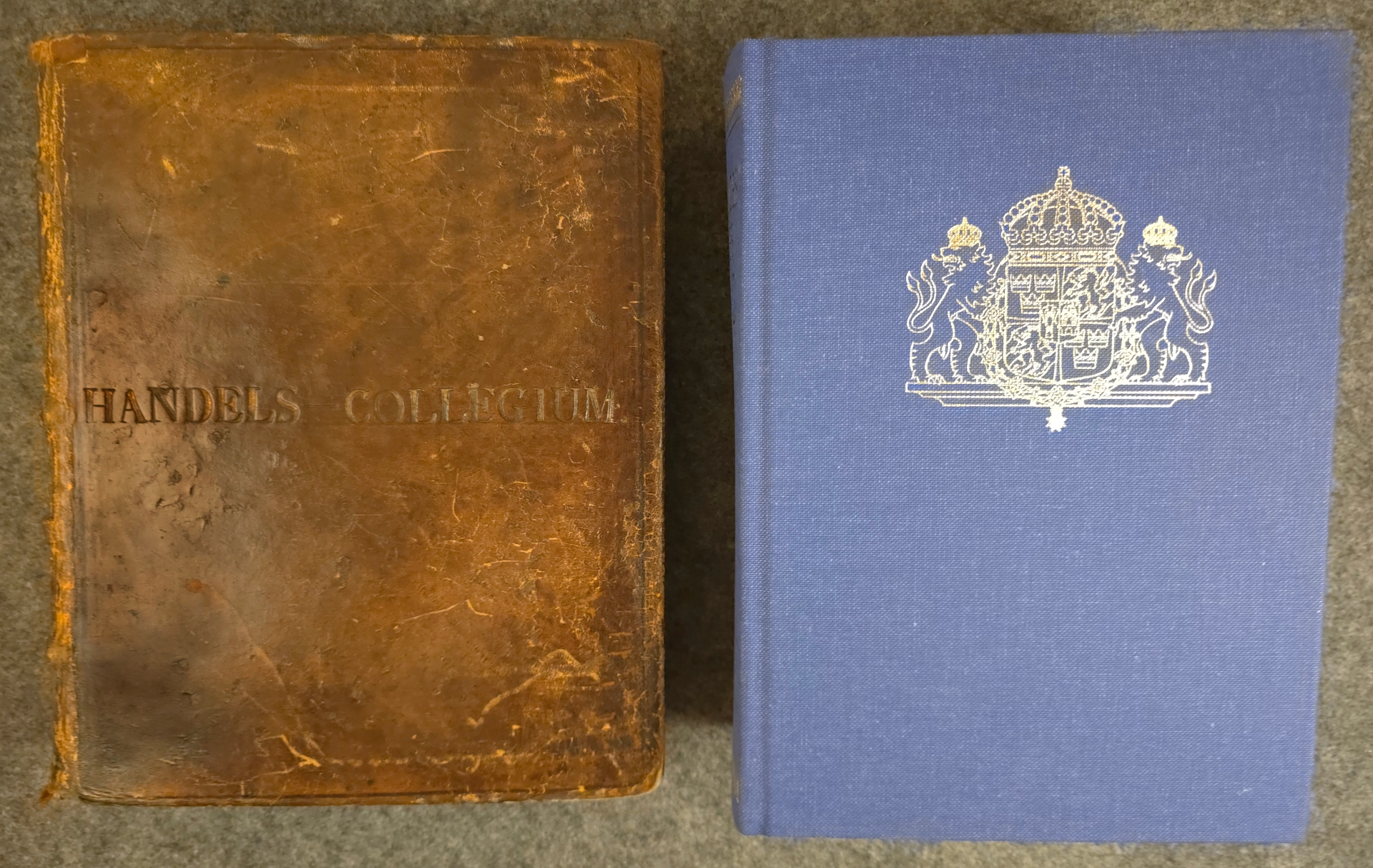
Scale Comparison (Top)
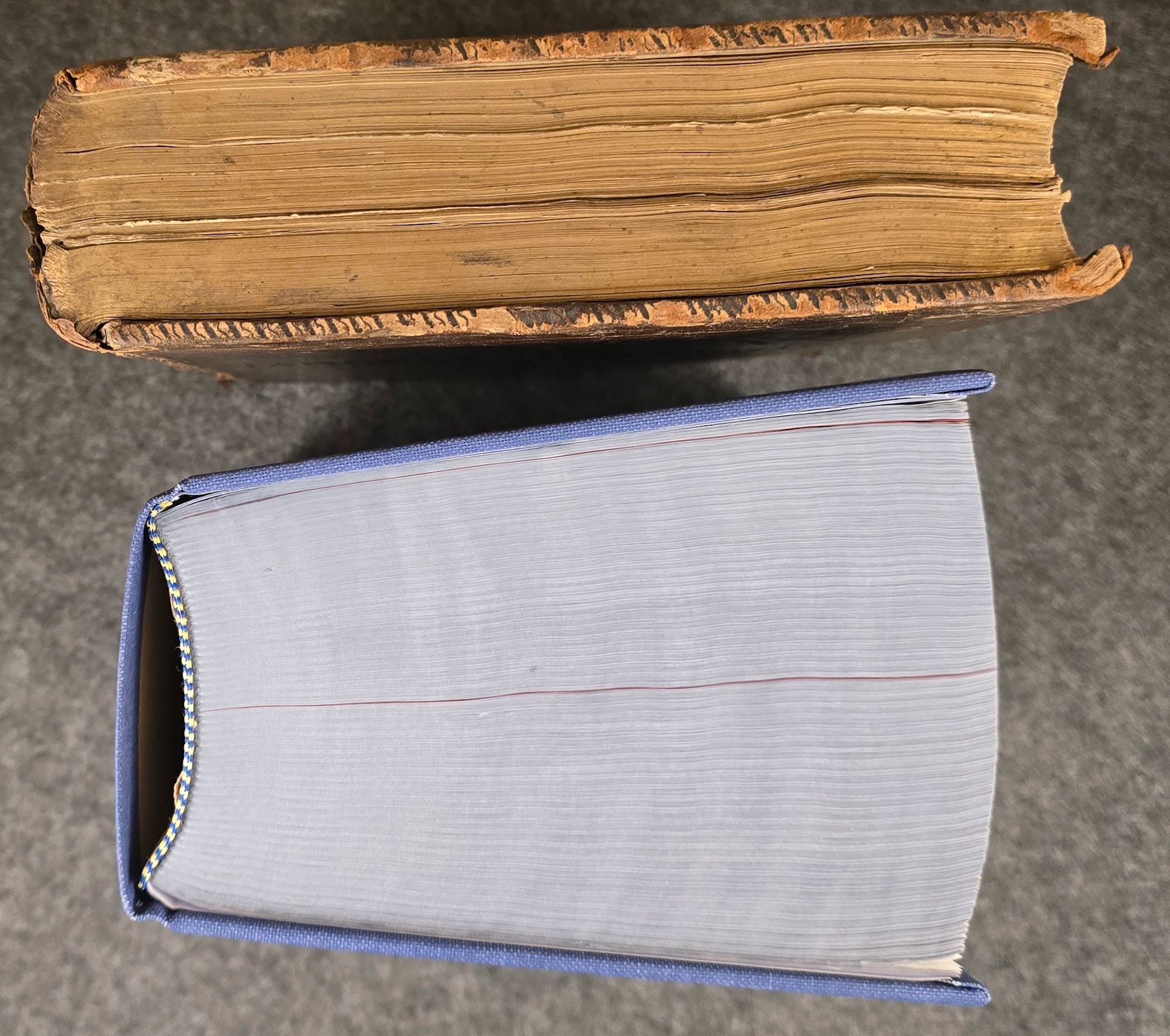
Scale Comparison (Side)
Why remediate?
This artefact has previously been digitised and made publicly available through Litteraturbanken. While this prior digitisation serves more as documentation, our process aims to not only document but also provide interpretation (Kronlund, 2021a).
The aim of this project is to create a contextualised digital edition of Sweriges rikes lag 1734. We provide physical context by displaying the artefact next to a widely accessible modern law book. We also explore the historical value and significance of the document itself. Additionally, we apply the techniques described by Kronlund (2021a, 2021b, 2021c, 2021d). This allows us to display the archival process to the viewer and reflect critically on our methodological choices. By refashioning the artefact into an interactive web environment, we move beyond a neutral digital reproduction and actively remediate the text to add new layers of interpretative meaning (Björk, 2015).
Specifically, we remediated this text to achieve three primary goals:
- Methodological Reflection: By acting as "DIY archivists," we engaged directly with the physical and technical constraints of digitisation. These constraints included lighting, framing, and hardware limitations. This allowed us to critically examine the gap between theoretical archival standards and practical execution. We also documented the paradata (Dillen, 2023) of the digitised document, which is detailed further on the process page.
- Multimodal Accessibility: A flat image of 18th-century Swedish is inaccessible to many. Therefore, we remediated the original artefact into an interactive multimodal interface. We achieved hypermediacy (Bolter & Grusin, 1999) through adding bounding-box navigation, modern Swedish and English translations, and Text-to-Speech (TTS) functionality. This significantly broadens the potential audience and availability (Kronlund, 2021a).
-
Open Data & Standards Compliance: Rather than just displaying a picture, we embedded
rigorous structural and descriptive metadata (Dublin Core, EXIF, IPTC) into the files. By hosting the raw,
uncompressed archival
.tifffiles on Zenodo, we transformed a static web image into a verifiable, open-access dataset for future digital humanities research.